Cashless vs Reimbursement Health Insurance: What's the Difference?
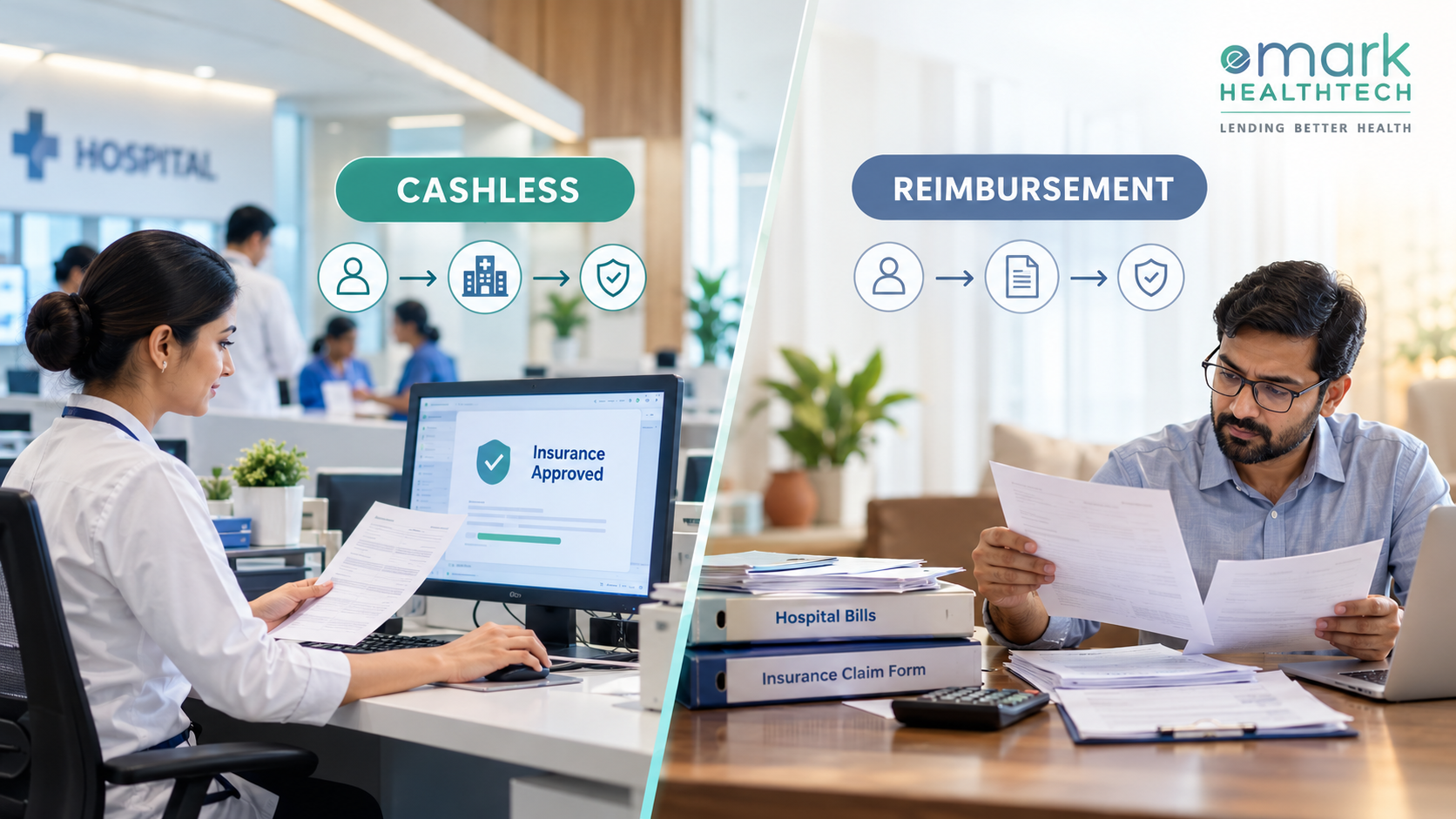
Health insurance can help protect individuals and families from significant medical expenses. However, understanding how a health insurance claim is settled is just as important as having a policy.
Two common ways in which eligible health insurance claims may be processed are cashless treatment and reimbursement claims.
Although both processes are designed to provide coverage according to the policy, the way the hospital bill is handled can be different. Understanding this difference can help insured patients prepare for hospitalization and manage their medical expenses more effectively.
What Is Cashless Health Insurance?
Cashless treatment generally allows an insured patient to receive eligible treatment at a hospital that is part of the insurer's network, subject to the policy terms and the required approval process.
Instead of the patient paying the entire eligible hospital bill upfront and later seeking reimbursement, the insurer or its authorized claims administrator coordinates settlement of the approved amount with the hospital.
Important: Cashless does not necessarily mean that every hospital expense is automatically covered. Deductibles, co-payments, exclusions, non-medical expenses, policy limits and other applicable terms may still need to be paid by the patient.
What Is Reimbursement Health Insurance?
In a reimbursement claim, the patient generally pays the hospital expenses and subsequently submits the required claim documents to the insurer or claims administrator.
After reviewing the claim and supporting documents, the insurer determines the eligible amount payable according to the policy terms and processes the reimbursement.
The exact documents and timelines can vary depending on the insurer, policy and nature of the treatment.
Cashless vs Reimbursement: Key Differences
| Cashless | Reimbursement |
|---|---|
| Treatment is generally taken at an eligible network hospital. | Treatment may be taken at a hospital permitted under the policy's reimbursement conditions. |
| The approved eligible amount may be settled with the hospital through the cashless process. | The patient generally pays the hospital first and then submits the claim for reimbursement. |
| Pre-authorization or approval may be required. | Claim documents are generally submitted after treatment or hospitalization. |
| The patient may still need to pay non-covered expenses, co-payments or applicable deductions. | The insurer reimburses the eligible amount according to policy terms after claim assessment. |
How Does a Cashless Claim Generally Work?
The exact process varies between insurers and policies, but a typical cashless claim may involve the following steps:
- Patient chooses an eligible network hospital.
- Hospital submits the required pre-authorization or treatment information.
- Insurer or claims administrator reviews the request according to the policy.
- Approval is provided subject to applicable terms and conditions.
- Eligible expenses are settled through the cashless process.
- Patient pays applicable non-covered expenses, deductions or co-payments, if any.
How Does a Reimbursement Claim Generally Work?
A reimbursement claim generally involves these steps:
- Patient receives treatment and pays the hospital expenses.
- Patient collects hospital bills, discharge documents, prescriptions, reports and other required records.
- Required documents are submitted to the insurer or claims administrator.
- The claim is reviewed against the policy terms.
- The eligible amount is reimbursed after claim assessment.
What Should Patients Check Before Hospitalization?
Before planned hospitalization, insured patients should understand the important conditions of their health insurance policy.
- Whether the hospital is part of the insurer's network.
- Sum insured and available coverage.
- Applicable co-payment.
- Room-rent or treatment limits.
- Waiting periods.
- Sub-limits and exclusions.
- Required pre-authorization or claim intimation.
- Documents required for claim processing.
Why Understanding Your Policy Matters
Having health insurance does not necessarily mean that every medical expense will be covered in full. Coverage depends on the specific policy wording, limits, exclusions and other applicable conditions.
Understanding these details before treatment can help patients anticipate possible out-of-pocket expenses and follow the correct claim process.
Cashless or Reimbursement: Which Process Applies?
The applicable claim process depends on several factors, including the patient's policy, insurer, hospital, treatment and the terms governing the claim.
Therefore, patients should check their policy documents and confirm the applicable process with their insurer or claims administrator before hospitalization whenever possible.
Frequently Asked Questions
What is cashless health insurance?
Cashless health insurance allows eligible treatment expenses to be settled through the cashless process with an eligible network hospital, subject to policy terms and approval.
What is reimbursement health insurance?
In reimbursement, the patient generally pays the hospital and subsequently submits the required documents to the insurer for assessment and reimbursement of eligible expenses.
Is cashless always completely free for the patient?
No. Cashless treatment does not necessarily mean zero payment. Co-payments, deductibles, non-medical expenses, exclusions, policy limits and other non-covered expenses may still apply.
Can a patient choose between cashless and reimbursement?
This depends on the policy, insurer, hospital and circumstances of the claim. Patients should confirm the applicable process before treatment.
Final Takeaway
Cashless and reimbursement are two different ways of processing eligible health insurance claims. The key difference is generally how the hospital expenses are paid and subsequently settled.
Knowing your policy conditions, understanding the claim process and keeping the required documents ready can make the insurance journey easier to manage.
For any medical insurance claim, always refer to your policy documents and confirm the applicable requirements with your insurer or authorized claims administrator.
← Back to All Blogs